
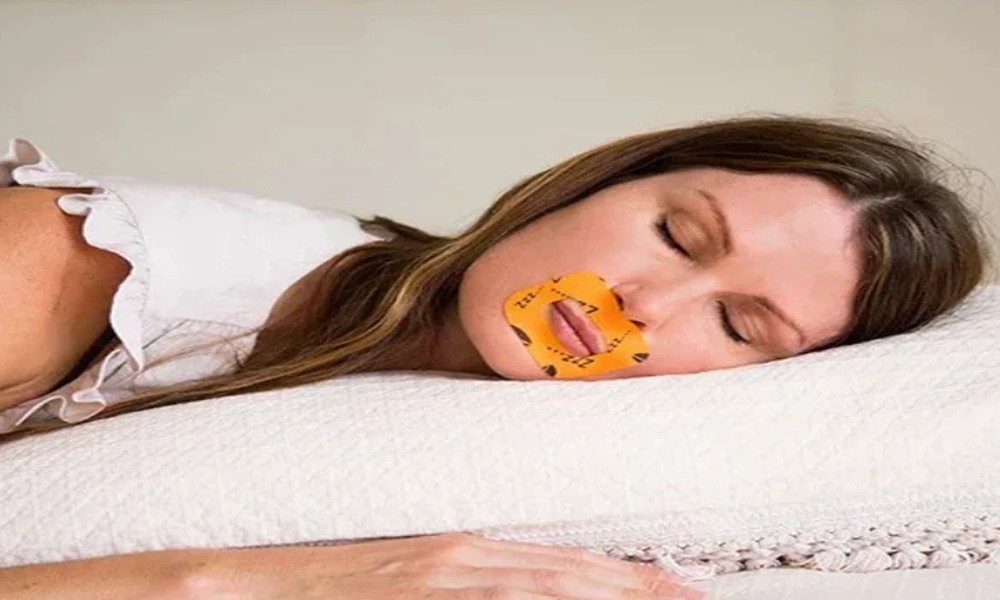
Walk into any conversation about poor sleep and the suggestions come fast. Magnesium supplements, blackout curtains, no screens after dark, chamomile tea before bed. All reasonable ideas, none of them addressing what actually happens inside the airway once the body goes horizontal and the jaw quietly relaxes. That is where mouth breathing takes over without any warning, and that is the problem a growing number of people are solving when they buy mouth tape for sleep rather than reaching for yet another supplement that misses the point entirely.
What the Jaw Does at Night
Most people have no idea their mouths fall open during sleep. There is no sensation to register it, no moment of awareness – it simply happens as the muscles around the jaw lose their daytime tension. The mandible drops, the lips part, and the entire respiratory workload shifts from the nose to the mouth. What makes this worth understanding is that the shift does not just change where air enters the body. It changes the chemistry of every single breath taken for the rest of the night. Nasal breathing produces nitric oxide, regulates carbon dioxide exchange, and filters incoming air before it reaches the lungs. Mouth breathing does none of that. The body still functions, but it works considerably harder and recovers far less efficiently than it should throughout the night.
The Dry Mouth Clue
Waking with a dry mouth gets treated as a minor inconvenience – something solved with a glass of water on the bedside table and forgotten by breakfast. It is actually one of the clearest signals the body sends to indicate that mouth breathing dominated the night. Saliva production naturally slows during sleep, and when airflow passes continuously over oral tissue for hours on end, desiccation happens rapidly. Beyond the discomfort, this creates conditions where oral bacteria thrive unchecked, gum tissue becomes persistently irritated, and dental enamel loses the protective coating that saliva normally maintains. People investing in dental treatments while mouth breathing every night are quietly working against themselves without ever connecting the two things.
Where the Tape Fits In
Mouth tape does something deceptively straightforward. It keeps the lips in contact, which prevents the jaw from dropping, which keeps nasal breathing as the only accessible option through the night. The body does not resist this – it adapts within moments because nasal breathing is the natural path of least resistance when the mouth is gently held closed. Those who buy mouth tape for sleep find the product itself is not intimidating. It is a soft, skin-safe strip with light adhesion – enough to maintain lip contact comfortably, not enough to cause distress or restrict breathing if the mouth genuinely needs to open. The mechanism stays simple because the problem it corrects is mechanical rather than chemical.
Why Other Remedies Fall Short
Anti-snoring mouthguards reposition the jaw but leave the mouth open and the airway unaddressed. Chin straps tackle jaw drop but are cumbersome enough that most people abandon them within weeks. Nasal sprays treat congestion effectively but do nothing about a jaw that falls open in an otherwise clear airway. Every one of these targets a downstream symptom rather than the upstream habit driving it. Mouth tape for sleep addresses the actual entry point – the lips themselves – which is why it tends to produce results that other interventions circle without quite landing on. People who have cycled through multiple sleep aids often describe mouth tape as the thing that finally made the others feel unnecessary.
What Consistent Use Reveals
The first few nights with mouth tape tend to deliver immediate signals – less throat dryness upon waking, slightly sharper mornings. What develops over the following weeks is more revealing. Sleep architecture shifts when breathing stabilises throughout the night. The body begins spending more time in the deeper stages where physical repair, memory consolidation, and hormonal regulation genuinely occur. Steadier afternoon energy replaces the low-grade fatigue that fragmented light sleep quietly produces over time. These outcomes reflect what the body does when it finally stops compensating for a breathing inefficiency it was never supposed to manage in the first place.
Conclusion
The connection between nighttime breathing and daytime performance is tighter than most people ever stop to investigate properly. Poor sleep gets blamed on stress, busy schedules, and screen time – rarely on an open jaw doing silent damage every night. Those who buy mouth tape for sleep are correcting something structural that no lifestyle adjustment or supplement ever quite reaches. Small intervention, disproportionate return. That combination is precisely why it tends to outlast every more complicated solution people try before stumbling across it.