
Sex therapy is one of the most misunderstood forms of professional mental health care. For many people, the phrase still carries associations with outdated portrayals in film and television, or generates assumptions about what the sessions involve that have little to do with the reality of clinical practice. As a result, people who would genuinely benefit from sex therapy either dismiss it without consideration or confuse it with general couples counseling and wonder why the latter is not addressing the specific issues they are experiencing.
Understanding what sex therapy actually is, what it addresses, and how it differs from regular relationship counseling helps people make more informed decisions about the support that is actually appropriate for their situation.
What Sex Therapy Is
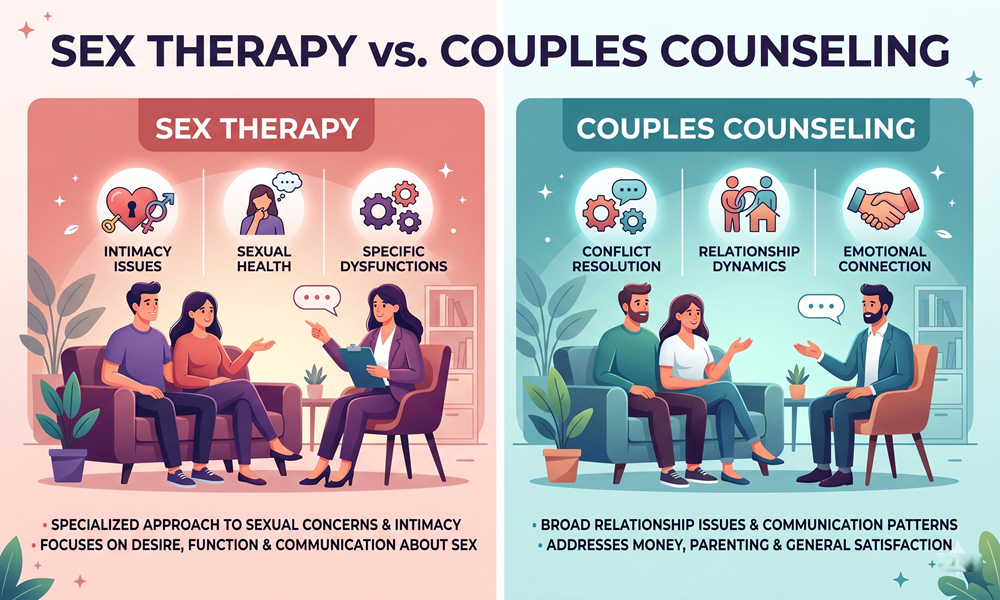
Sex therapy is a specialised form of psychotherapy focused specifically on sexual concerns, sexual functioning, and intimacy. It is conducted by trained mental health professionals who hold additional certification or training in human sexuality, sexual health, and evidence-based approaches to treating sexual dysfunction and related psychological issues.
Sessions take place in a clinical setting and are talk-based. Despite persistent misconceptions, sex therapy does not involve any physical contact or sexual activity between the therapist and client. It is a structured therapeutic process in which the therapist helps the individual or couple identify the psychological, relational, or physiological factors contributing to their concerns, and develop practical strategies for addressing them.
What Sex Therapy Addresses
The range of issues treated in sex therapy is broad. Common concerns include low or mismatched sexual desire, difficulties with arousal or orgasm, erectile dysfunction, painful sex, sexual anxiety and performance pressure, the aftermath of sexual trauma, and the impact of medical conditions or medications on sexual functioning. Sex therapy also supports individuals and couples navigating consensual non-monogamy, exploring identity and orientation, or managing the sexual dimensions of significant life transitions such as pregnancy, menopause, or recovery from illness. Sexual wellness therapists in Chicago who specialise in this field bring clinical training in all of these areas, offering a level of depth and specificity that general counseling is not designed to provide.
What distinguishes sex therapy from simply talking about sexual issues in general therapy is the structured application of evidence-based techniques. Sensate focus exercises, psychoeducation about sexual anatomy and response cycles, communication frameworks specific to sexual negotiation, and cognitive interventions for performance anxiety are among the tools used, all adapted to the individual’s or couple’s specific situation.
How Regular Couples Counseling Differs
General couples counseling, sometimes called relationship therapy or couples therapy, addresses the broader dynamics of a relationship. Communication patterns, conflict resolution, emotional intimacy, trust, life transitions, and relational patterns shaped by each partner’s background are all within the scope of couples counseling. It is highly valuable for relationships experiencing stress, disconnection, or recurring conflict.
Where couples counseling tends to be less equipped is in the direct clinical treatment of specific sexual concerns. A couples counselor may acknowledge that sexual intimacy is an area of difficulty and address some of the relational dynamics around it, but they may not have the specialised training to assess and treat erectile dysfunction, anorgasmia, vaginismus, or desire discrepancy using targeted clinical approaches. The conversation may improve, but the underlying issue remains unaddressed at a clinical level.
This is why many people find themselves completing a course of couples counseling, experiencing genuine improvements in their relationship communication and emotional connection, and still finding that the sexual dimension of the relationship has not shifted meaningfully. The two forms of therapy are complementary, not interchangeable, and for issues that are primarily sexual in nature, sex therapy is the more targeted and effective path.
When You Might Need Sex Therapy Specifically
If the concerns you are experiencing are primarily sexual in nature, such as a significant drop in desire, recurring pain during sex, difficulty with arousal or orgasm, anxiety specifically around sexual performance, or a history of sexual trauma that affects your current intimate life, sex therapy is likely to be more directly helpful than general couples counseling.
If the relationship has broader issues of which the sexual dimension is one part, combining sex therapy with couples counseling, either concurrently or sequentially, is often the most comprehensive approach. Many people also find that individual sex therapy is appropriate even without a partner, because sexual concerns are not exclusively relational and personal history, beliefs, and psychological patterns around sexuality are often the primary focus of the work.
There is no single correct entry point. What matters is finding a therapist with the specific training to address the issues you are bringing to the room, and being honest with yourself about what those issues actually are.
If you are weighing whether sex therapy or a different form of counseling is the right fit for your situation, learning more about what professional sex therapy in Chicago actually involves, including the types of concerns it addresses and how sessions are structured, is a practical starting point before making any decisions about seeking support.